In these recent years, the City of Rochester has been renovating the downtown area. They were hoping this would will encourage more people to come down to the city. This project focus was to figure out others way encourage people to visit the city.
Rochester has a rich but often overlooked history. It even operated the country's smallest subway system. The problem is, fascinating stories like this are tough to find for residents and visitors alike.
This realization sparked a question: if long-term residents struggle to engage with Rochester's narrative, what does that mean for visitors and newcomers?"
Projects Goals
Make it easier for more people to find interesting location.
Find a new way to teach the history of Rochester.
Make it more rewarding come down and learn about the city.
RoamRoc is an app designed to make exploring Rochester exciting and effortless. I wanted to create an engaging experience that encourages people to return, discover more, and immerse themselves in the downtown. RoamRoc offers a fun and enjoyable way to experience everything Rochester has to offer.

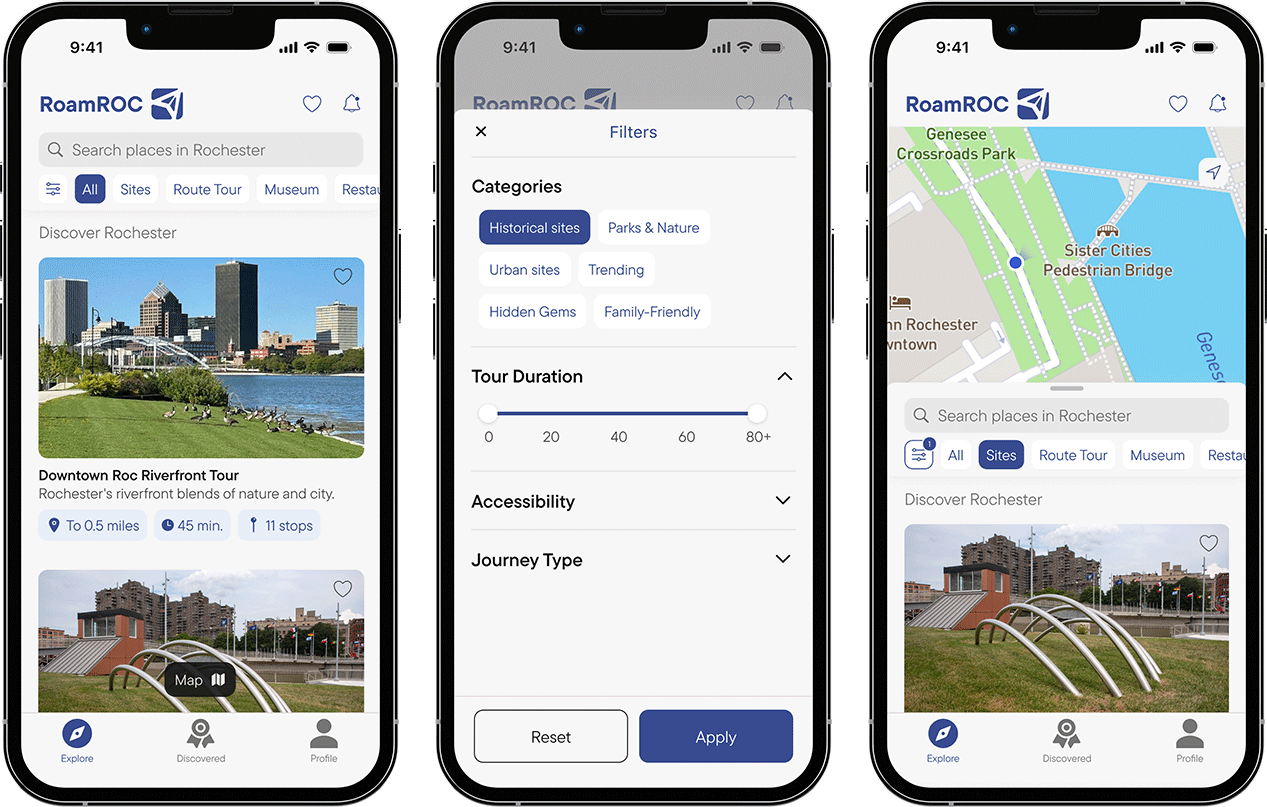
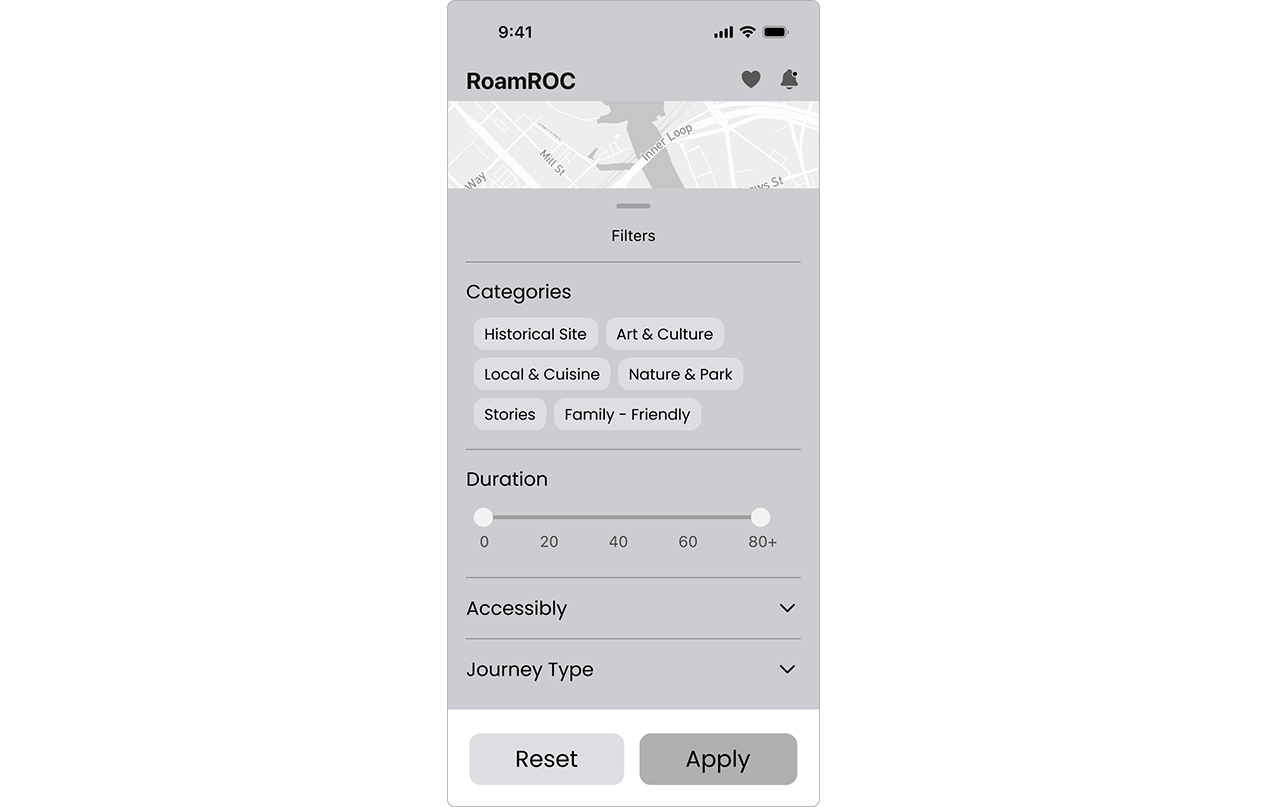
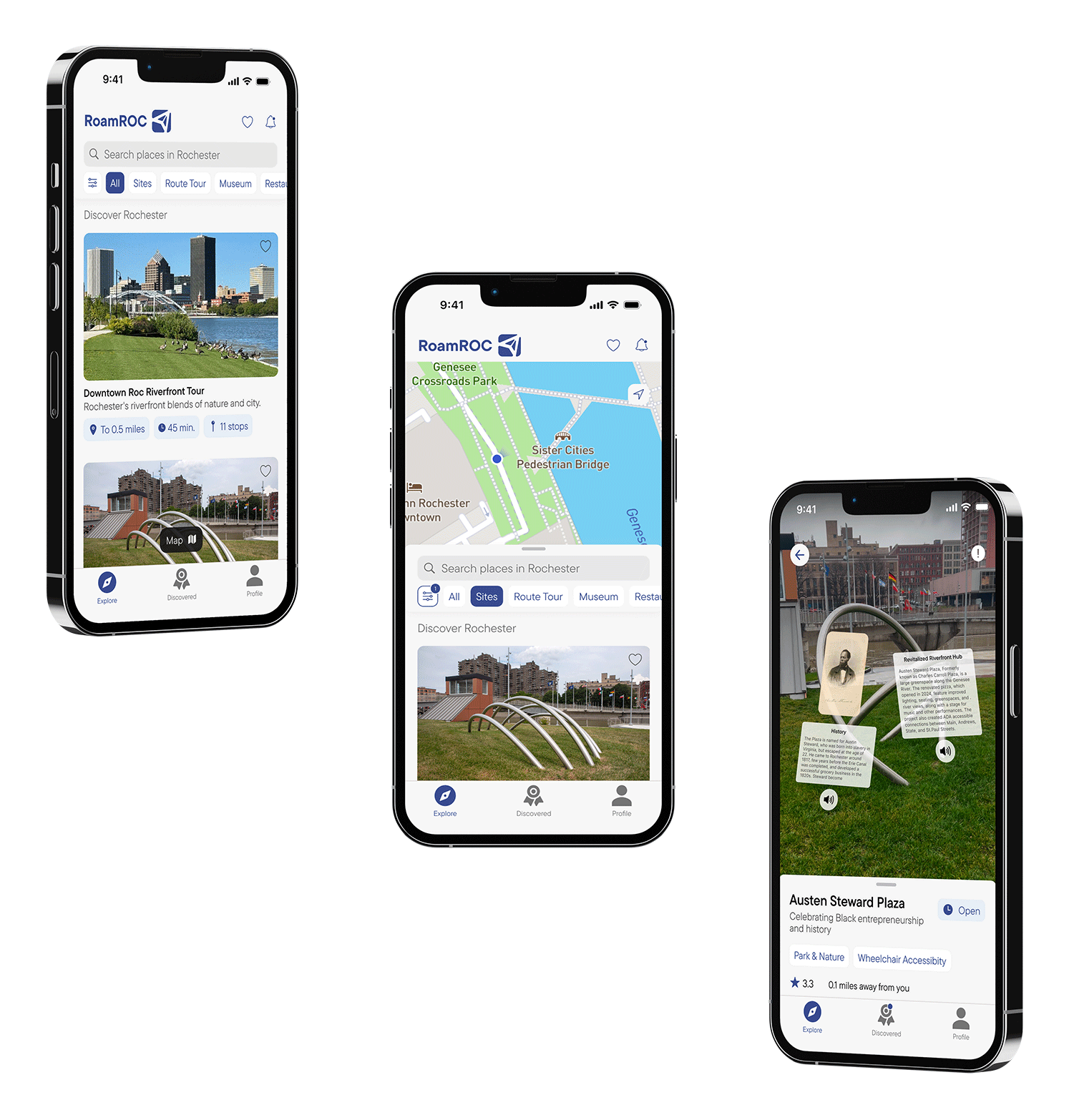
Your interests, your journey. Filter through topics that intrigue you or wander the map to stumble upon Rochester's secrets near you.

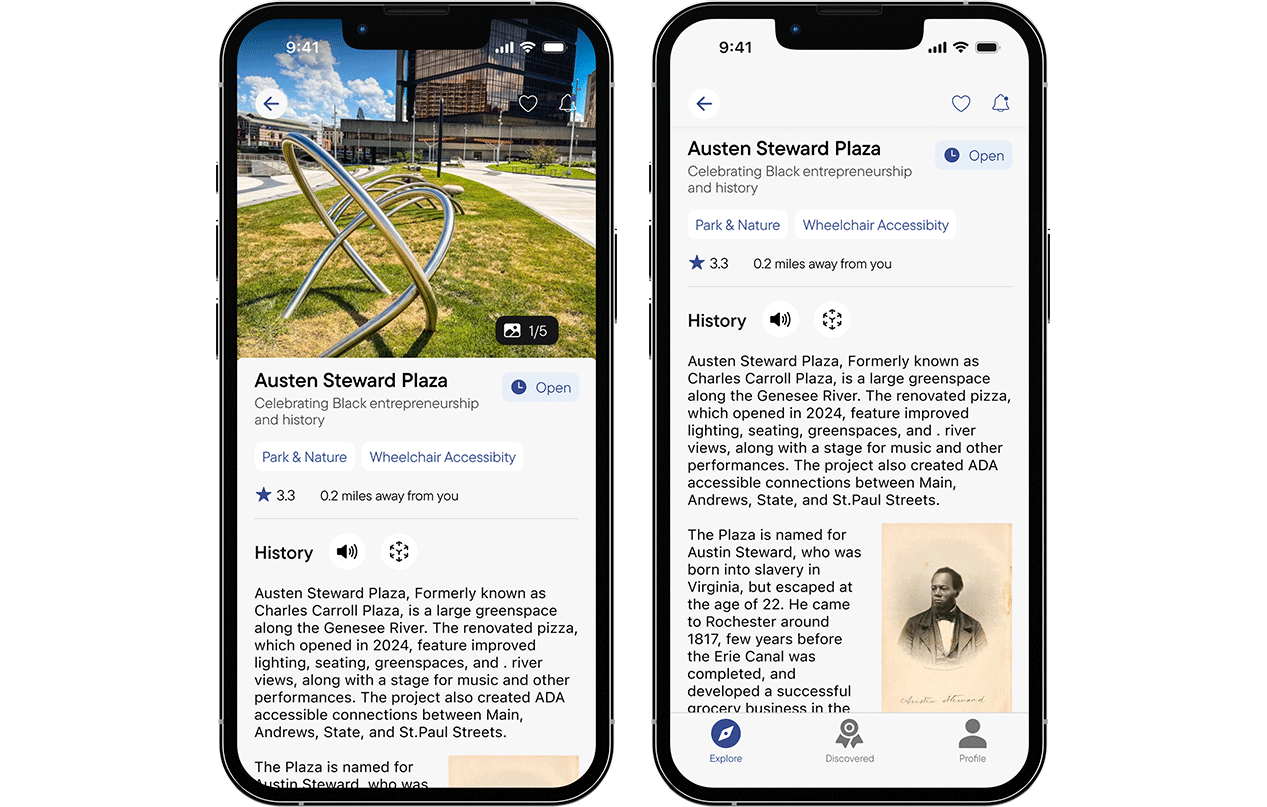
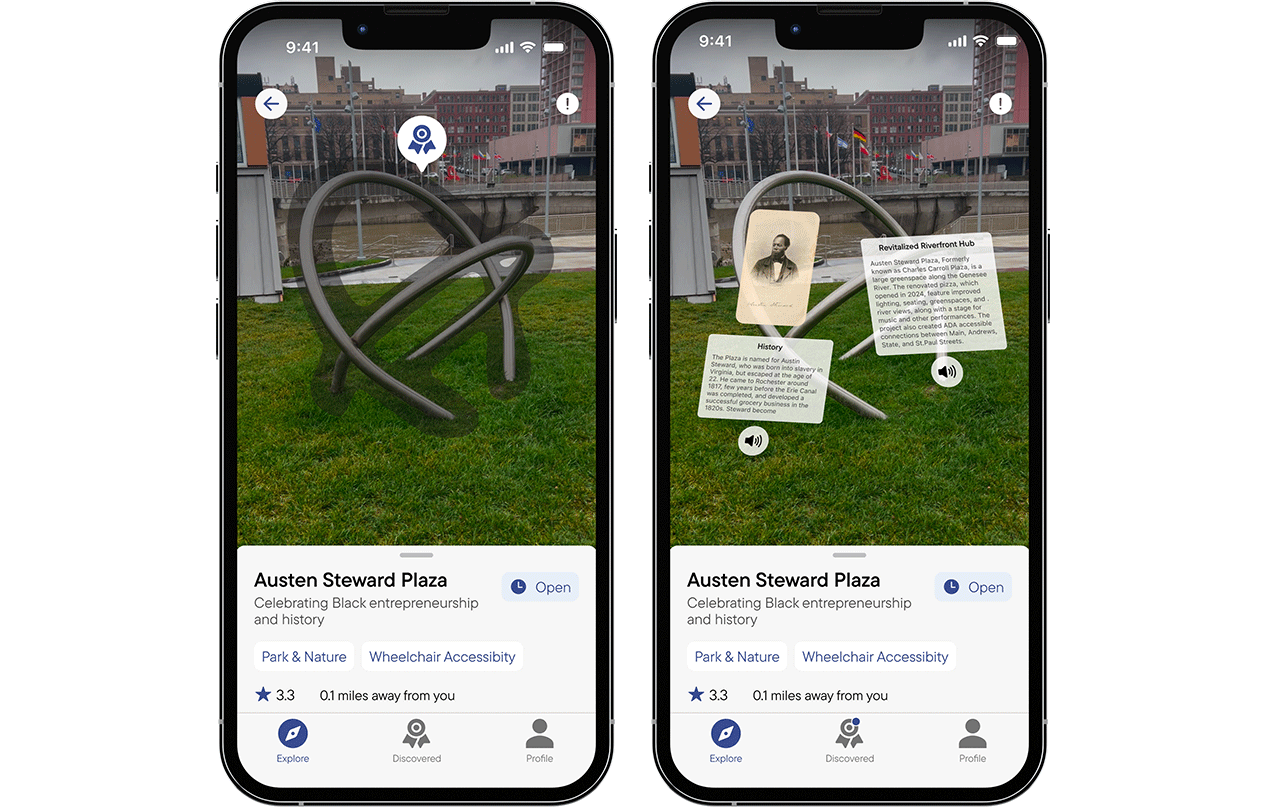
Discover why each location matters. Every hotspot comes with a full breakdown of its historical significance and impact on Rochester.

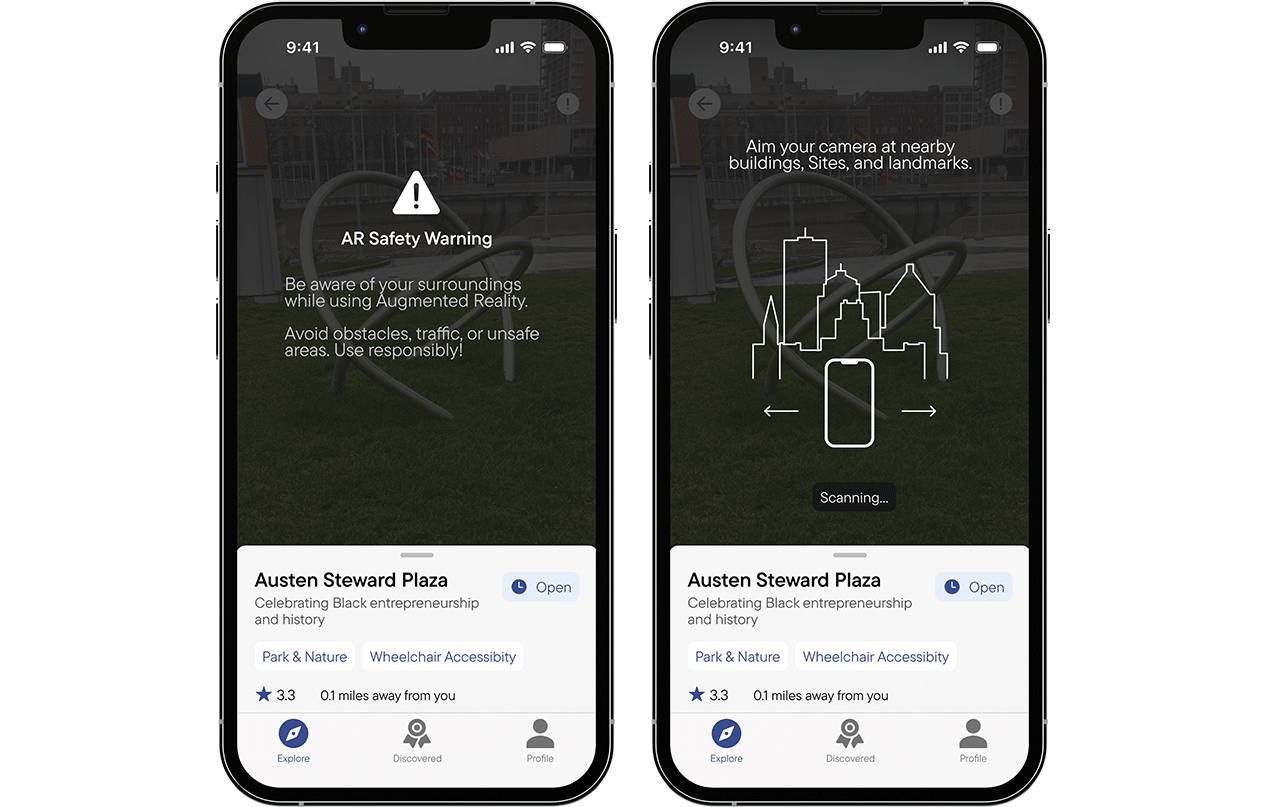
Since many users would be experiencing AR for the first time, I included safety warnings to remind them to stay aware of their surroundings.
I also created a brief tutorial to help them understand the feature and how use it properly.

Experience history through AR at every stop.Listen or read to stories that reveal interesting details about the area's past.

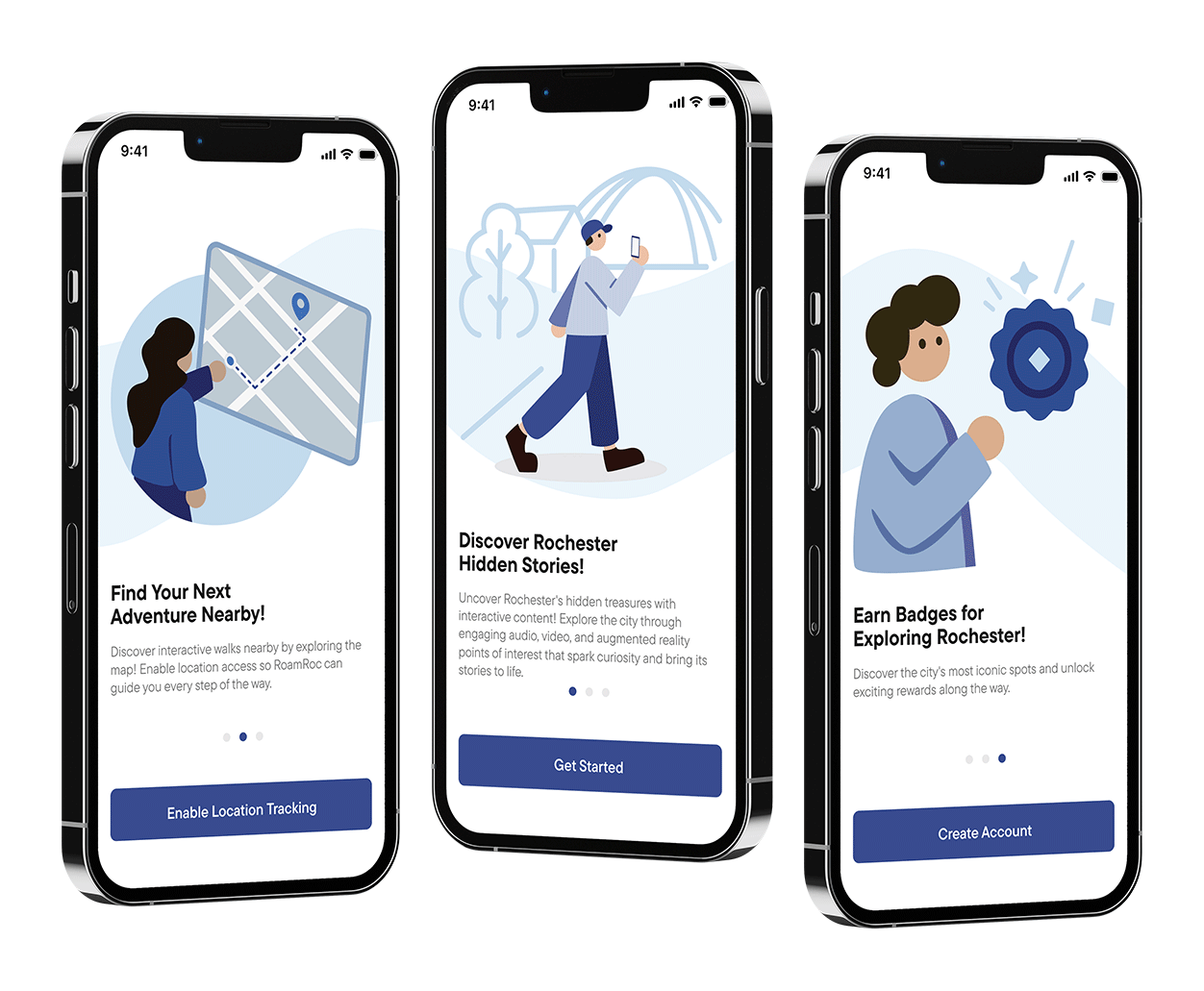
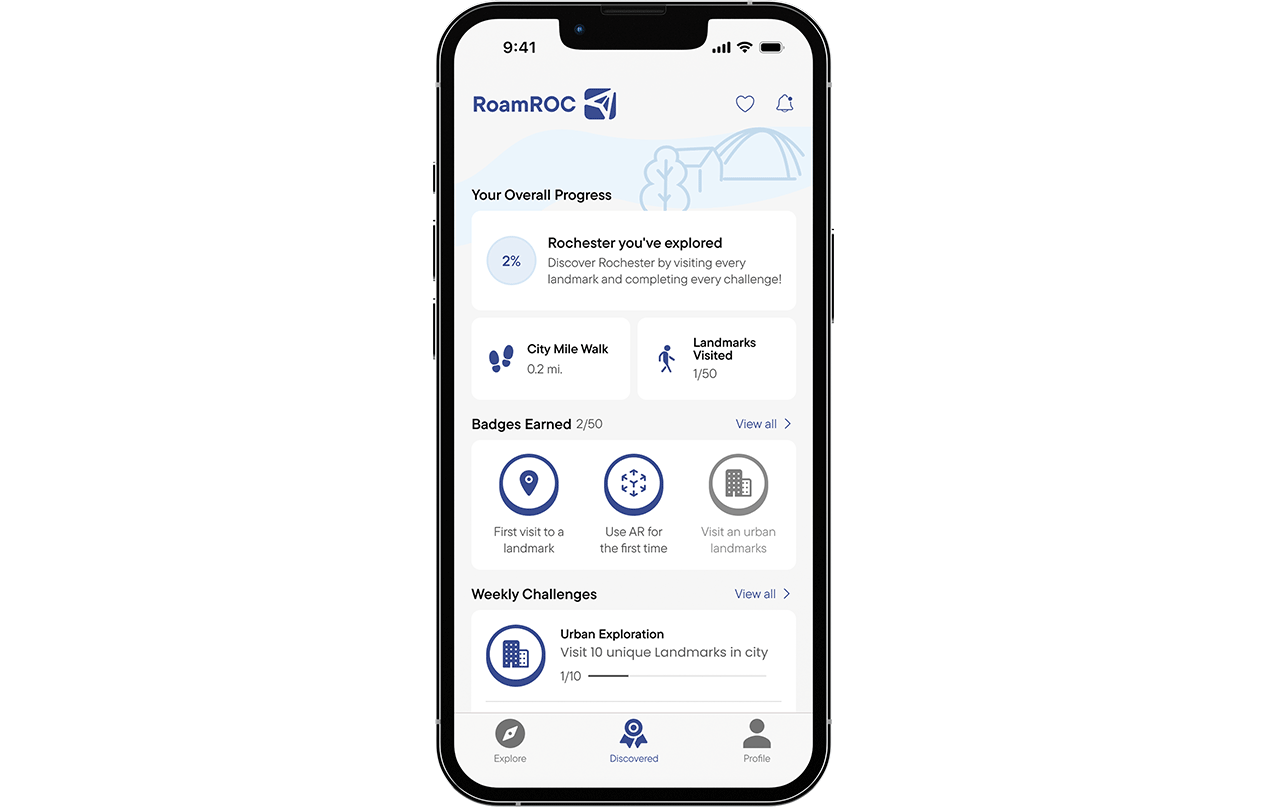
Earn badges as you visit locations around Rochester. By signing up, users can save their progress exploring the city.
There will be weekly and monthly challenges that encourage users to visit lesser know area of the city.

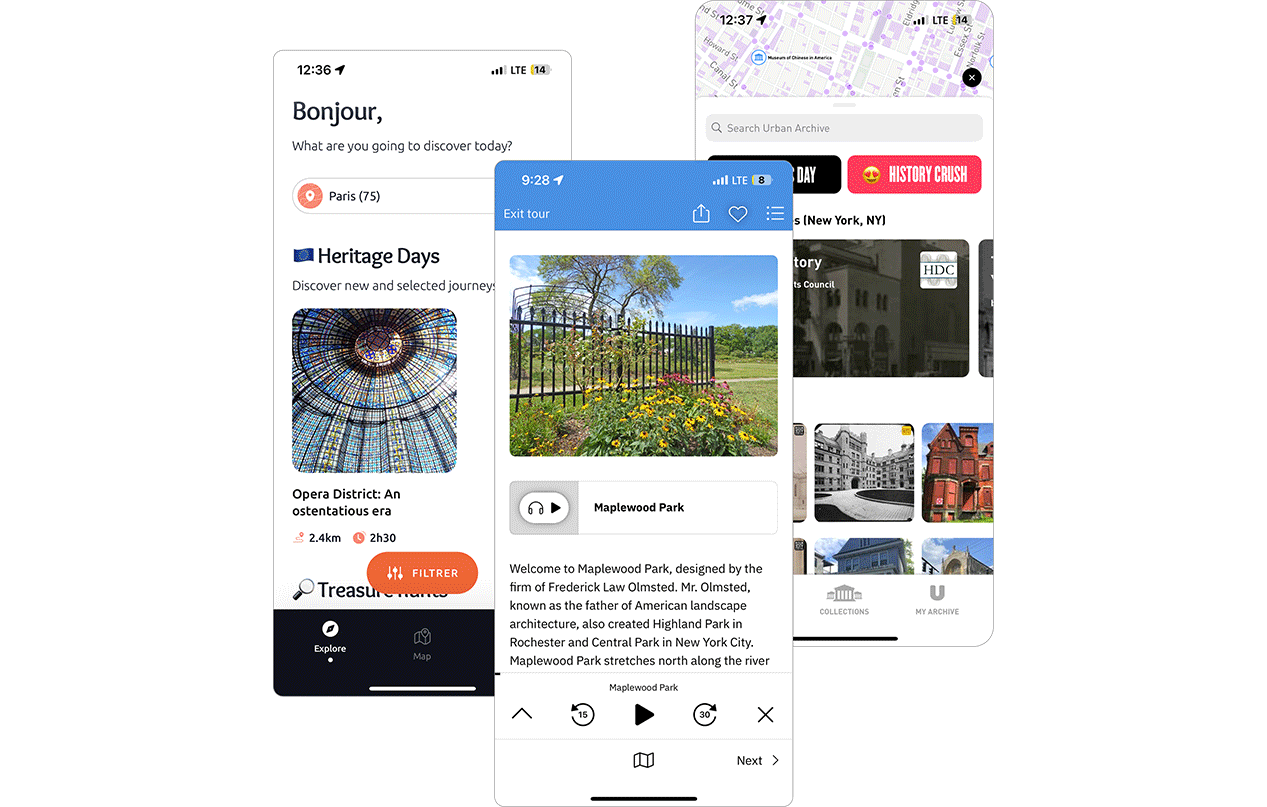
I analyzed apps addressing similar challenges in city exploration. TourBlend excels at customization, while Urban Archive offers interactive maps with rich historical content. By understanding their strengths and weaknesses, I identified opportunities to create a more engaging and well-rounded experience
Key insights:
Clean and modern with vibrant visuals that prioritize ease of use
Interactive maps that showcase hot spots
The app should be customizable

I conducted user interviews with 3 Rochester resident to understand the view point on a different experiences that draw them to city like audio tour, there goals when visiting the city, and what keeps them coming back to downtown.

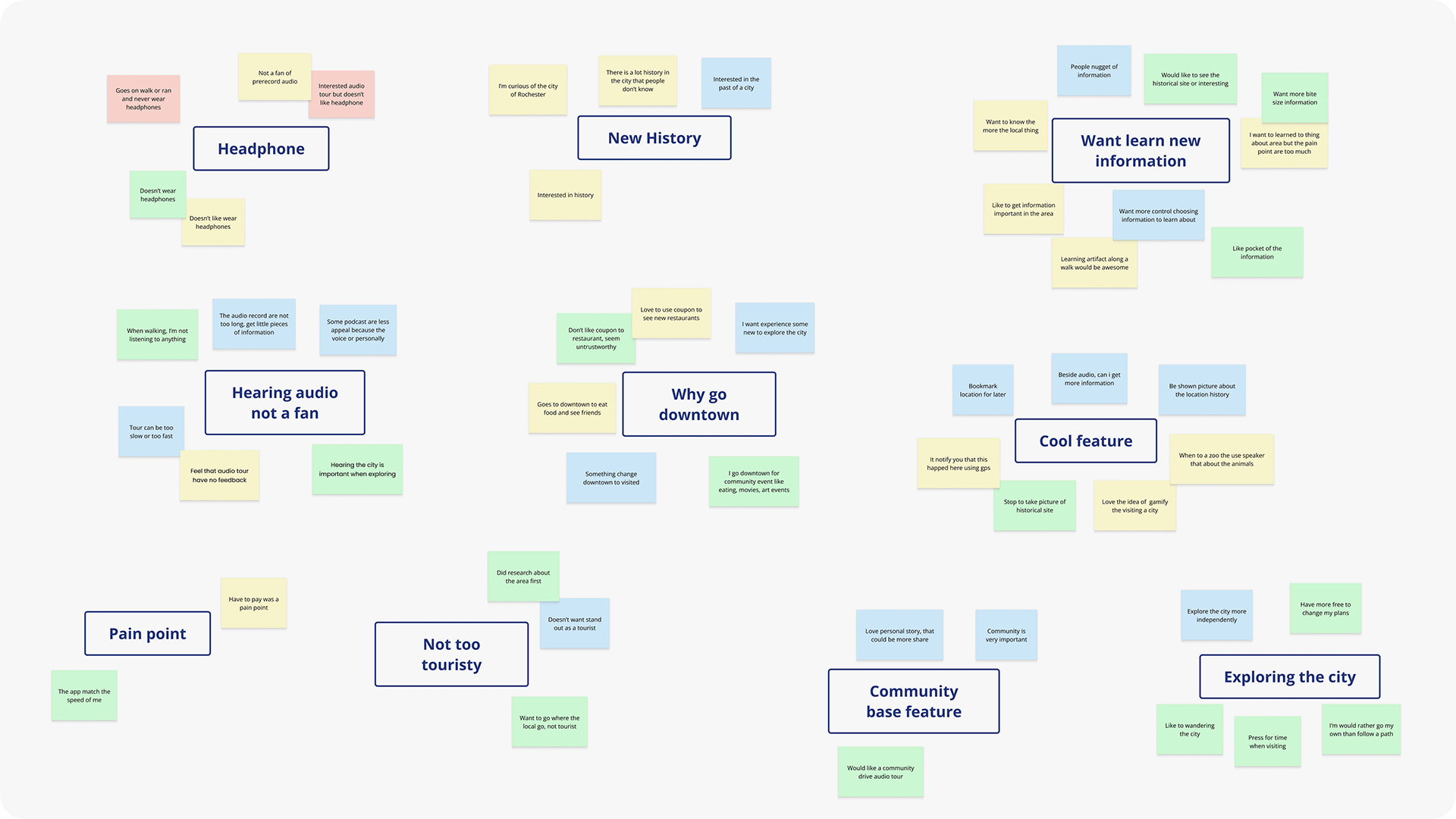
Use an affinity mapping to organize notes and quotes from the interviews.
The patterns I found in my research interview that guide my design:
"I always enjoy site seeing and learning new pocket of information about an area or building but getting that information can be inconvenient."
My thoughts:
I interviewed three Rochester residents to understand what draws them to the city. We discussed their experiences with activities like audio tours, their goals when visiting downtown, and what keeps them coming back.
"I hesitate to use a city audio tour because I want to explore the city in my own pace and I also won't enjoy wearing headphone."
My thoughts:
Participants expressed concerns about traditional audio tours limiting their experience. They wanted to avoid feeling locked into long, structured routes and valued the flexibility to explore Rochester on their own terms.
Many disliked using headphones while exploring. And also felt that the pacing of tours are too rigid, they are either too fast or too slow.
Focus on highlighting key city spots with clear navigation. Make learning about the city more engaging and interactive.
Use AR features to bring history to life with visual overlays. Making exploring rewarding to encourage visitors to come back to the city.
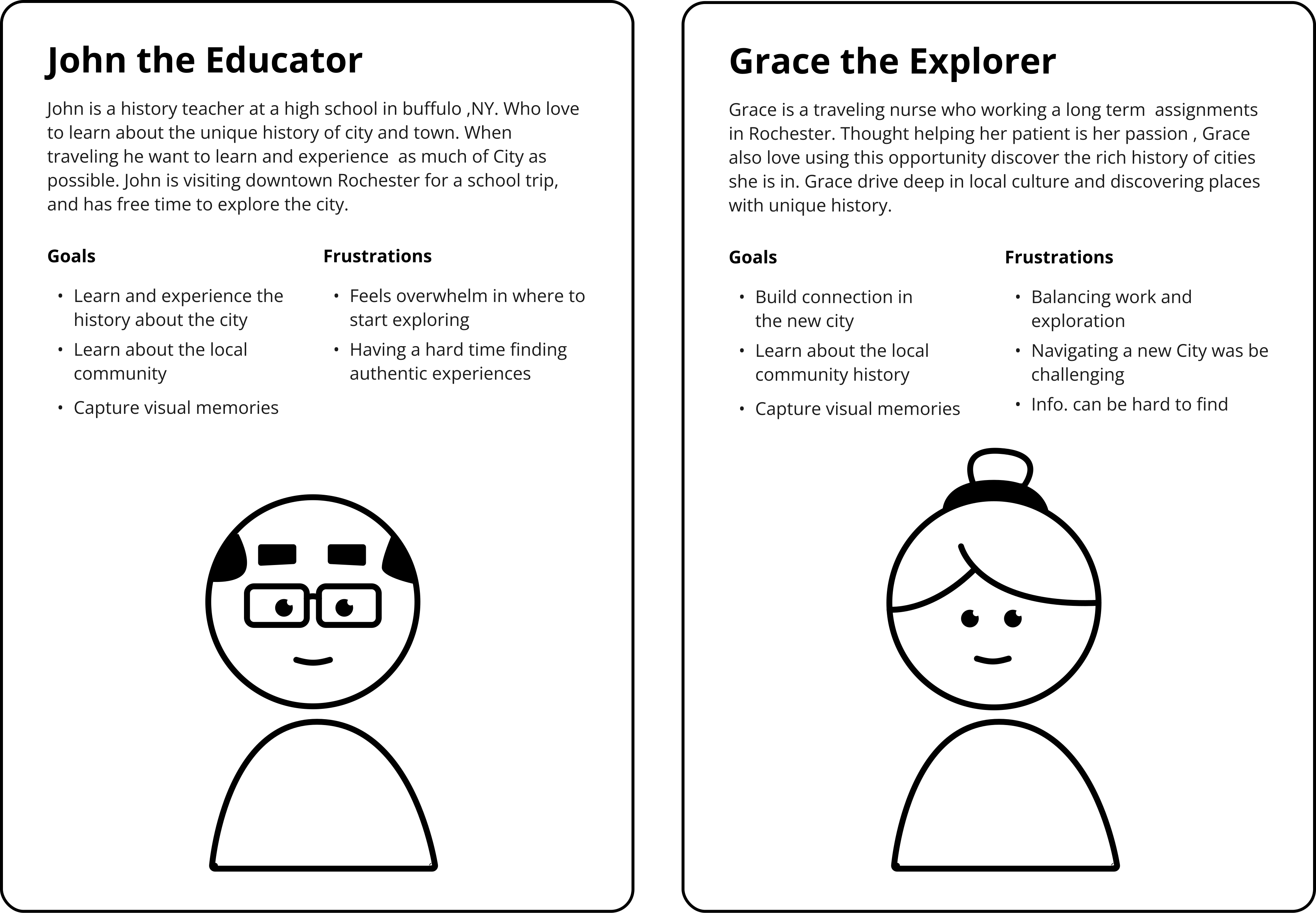
I selected the personas' age range to be between 26 and 40,as my previous research shows that this demographic is the most likely to seek out and try these types of experiences.
My solution focus on creating a simple experience that make finding these interesting stories of the city easier. The experience will be using the smartphone as it is a common device to have when traveling. This is providing more than just finding these locations like Google but also gives a depth history in how is it significant for the city.
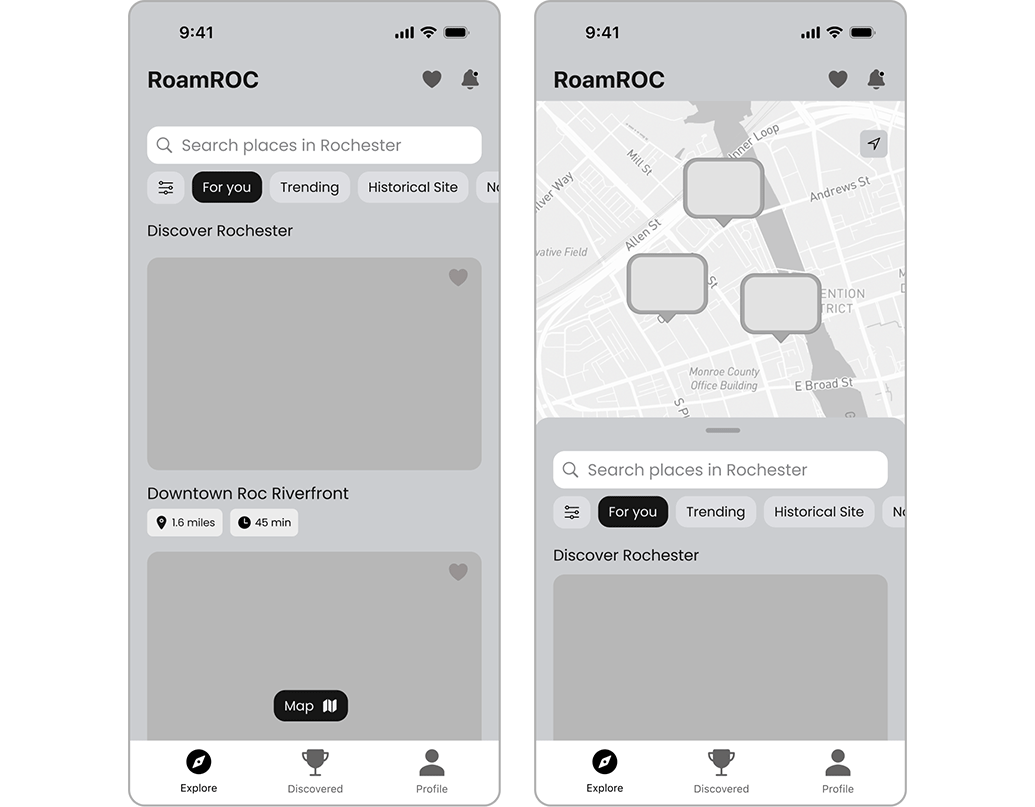
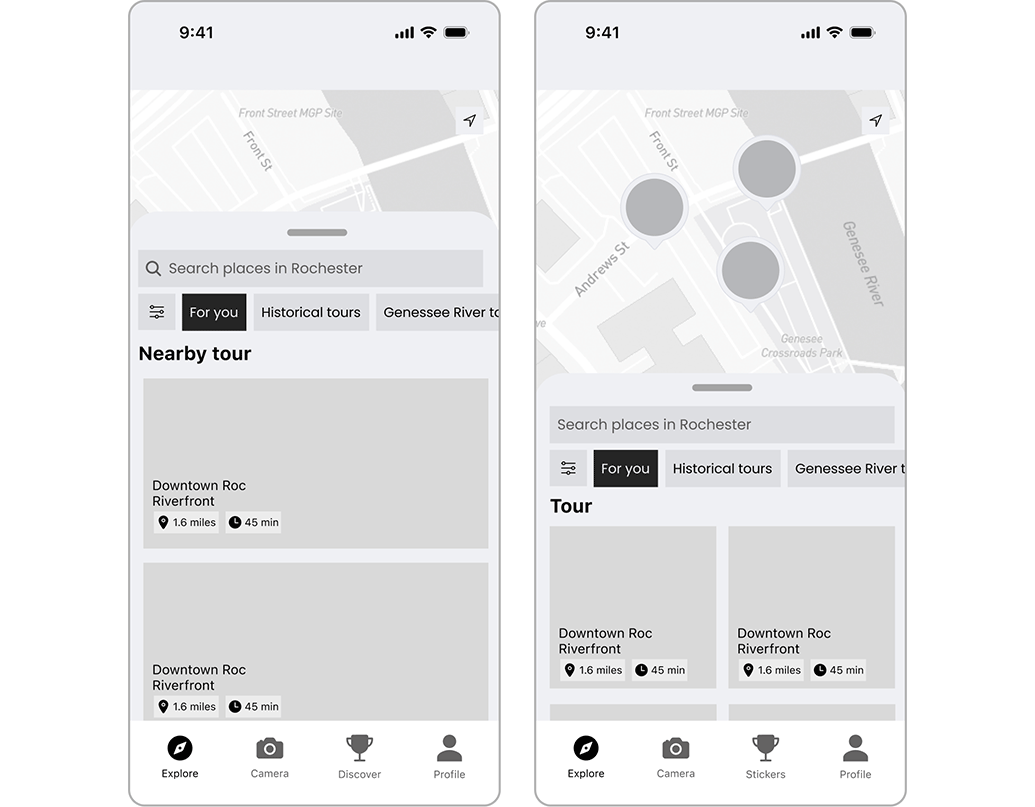
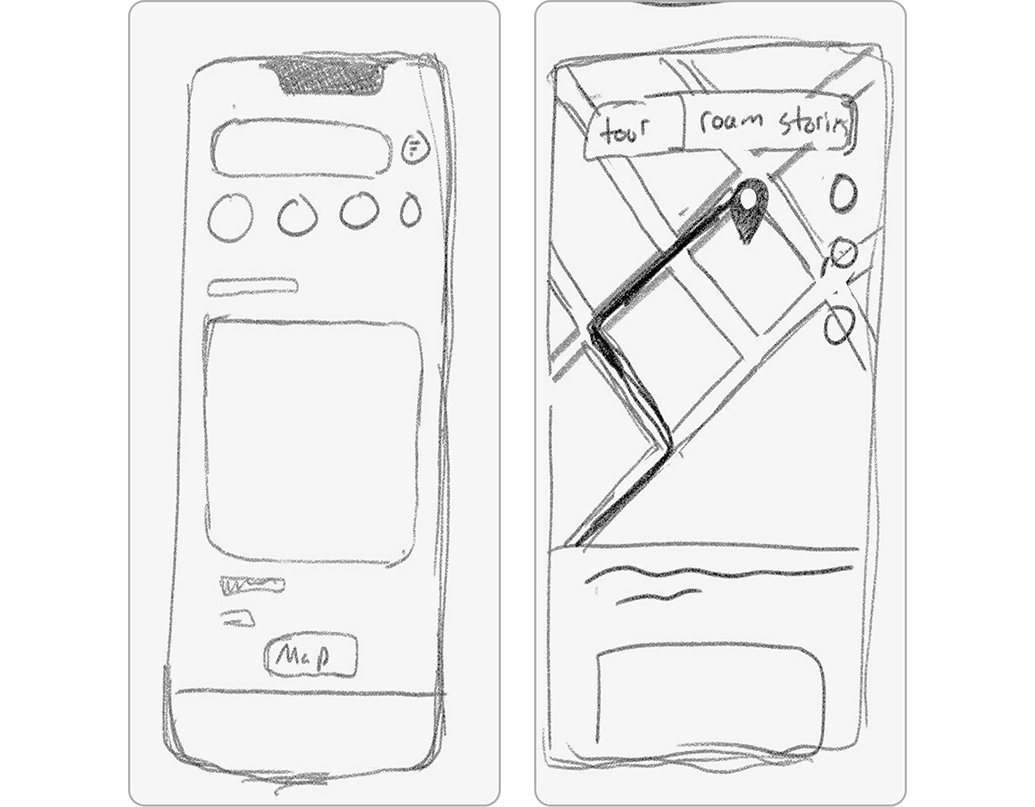
I began by brainstorming layout ideas and sketching them on paper. Once I had enough concepts, I created a low-fidelity wireframe to map out all the elements within the iPhone frame. Next, I moved to the high-fidelity wireframe, adding the necessary text and icons. I went through two iterations, refining element spacing and incorporating rounded corners for a polished design.
I had idea to have first main screen to have similar layout like app like yelp, where user can scroll down to discover new locations.
I explored a different layout were a I combine the discovering screen with the map page to make transition between more seamless.
I didn’t change much of the layout in the third iteration. I mainly focus on improve the visual element and the hierarchy.


User feedback highlighted the need for clearer visual hierarchy and tighter spacing. I combined the explore page and map feature to create a more seamless experience, and expanded filter options to make exploration more accessible for all users.

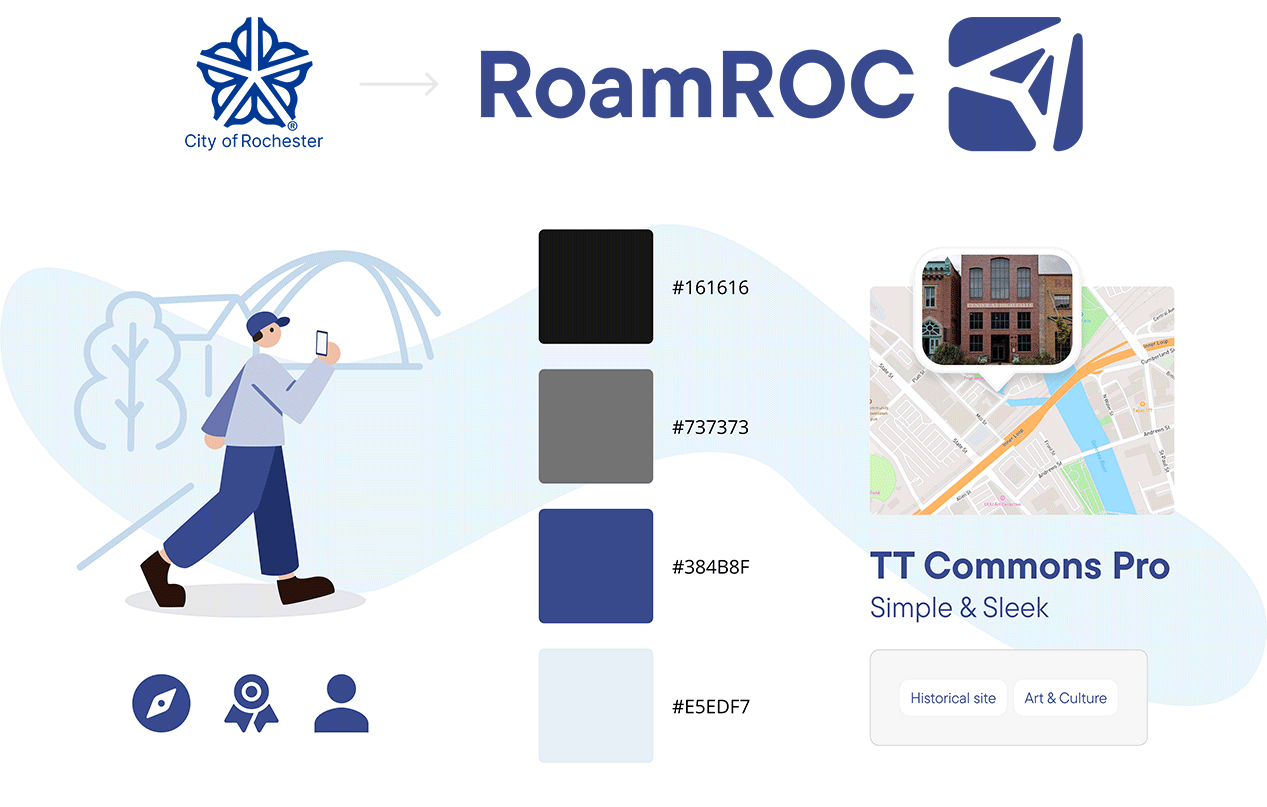
I chose a blue color palette to align with Rochester's city branding, which features a blue flower in its logo. Since Rochester is known for its rivers, I incorporated river imagery and blue tones throughout the design. For typography, I selected TT Commons Pro, a geometric font that's both modern and highly readable

I learned to conduct and understand data from user interviews to explore different users cases.
Spending too much time on the initial screens left less time to refine later features. Managing time effectively is key to making sure every part of the app is polished.
Adding illustrations to the onboarding process made the features more intuitive for new users, showing the value of visual aids.